
Alaska Obituary Records
Alaska obituary records are spread across newspaper archives, state databases, and borough offices throughout the Last Frontier. You can search historical death notices through the Alaska State Library, access death certificates through the Alaska Department of Health, and find old records at the Alaska State Archives. This guide covers where to look for obituary records in Alaska, how the state manages death and vital records, which online tools help with searches, and what rules govern public access to these documents across all 30 boroughs and census areas.
Alaska Obituary Records Overview
Alaska Obituary Records and Vital Statistics
The Alaska Department of Health's Health Analytics and Vital Records Section (HAVRS) is the central agency for all vital records in the state. HAVRS holds death records, birth records, marriage records, and divorce records for events occurring within Alaska. For obituary researchers, this office is the place to request certified death certificates that back up or supplement what you find in published obituaries. The office has records going back to the 1890s, though many events before 1930 were never formally registered.
Death records become public in Alaska after 50 years from the date of the event. This is set under Alaska Statute 18.50, the Vital Statistics Act. Before that 50-year mark, only eligible family members can get certified copies. Eligible requesters include a spouse listed on the certificate, a parent listed on the death certificate, children of the deceased, and siblings. Each must provide the right supporting documents. Attorneys and government agencies can also get records with proper documentation on letterhead.
Death certificates cost $30 for the first copy. Each additional copy ordered at the same time costs $25. You can submit requests in person at the Anchorage or Juneau offices, online via VitalChek, or by mail using downloadable forms. Mail and fax orders generally take 2 to 3 months. VitalChek online orders take 2 to 3 weeks. Note that requests cannot be filled until the record has been registered, which may take up to 3 months after the death.
The Alaska Department of Health has two walk-in offices: one in Juneau and one at 825 L Street in Anchorage. The Special Services Unit handles corrections to death certificates and can be reached at BVSSpecialServices@alaska.gov. General records inquiries go to BVSOffice@alaska.gov.
The CDC's guide for Alaska vital records confirms that requests should go to: Department of Health, Alaska Health Analytics & Vital Records Section, P.O. Box 110675, Juneau, AK 99811-0675. The CDC guide also notes that checks or money orders should be made payable to Alaska Vital Records Office, and all requests must include a copy of photo ID with a signature.
The Alaska Department of Health Vital Records portal is the official starting point for ordering certified death certificates and learning about eligibility requirements for Alaska obituary records.
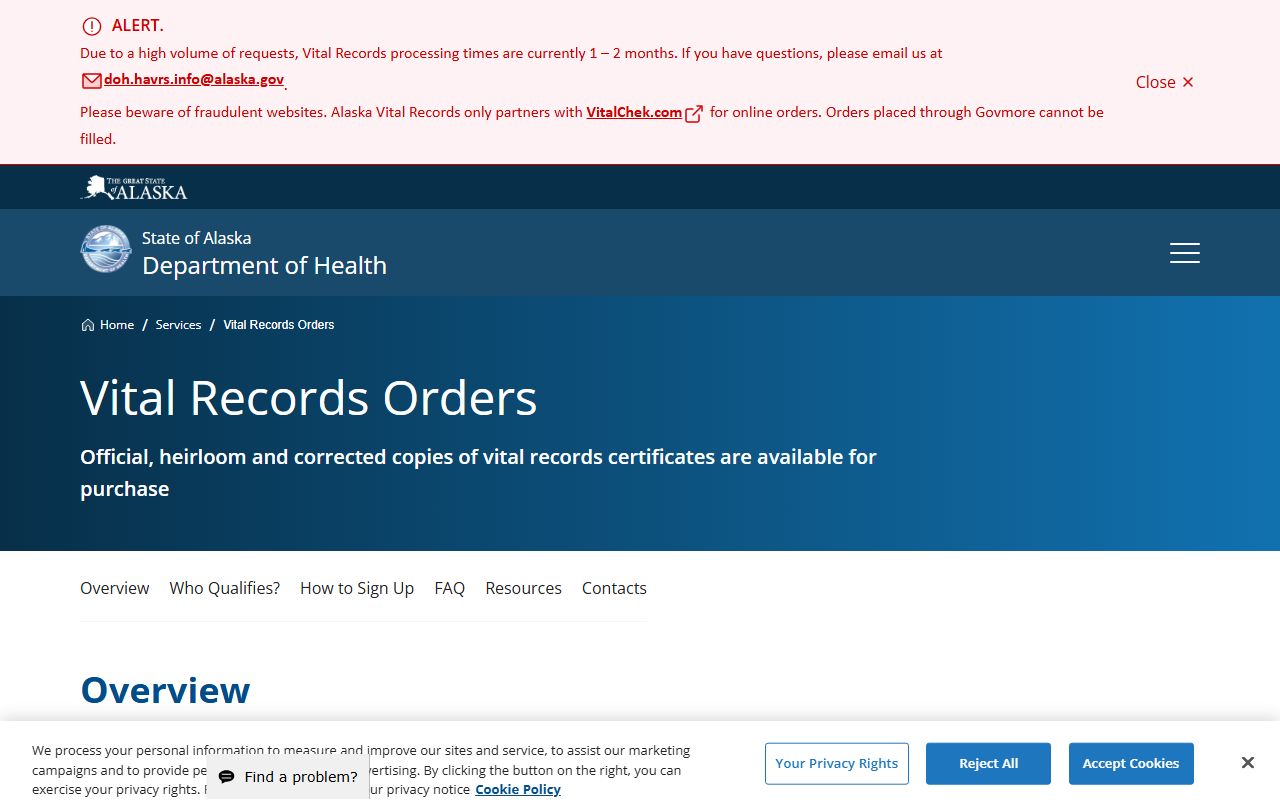
The portal shows the current fee schedule, eligible requester categories, and processing time estimates for death certificate orders.
Alaska Newspaper Obituary Archives
Newspapers are the most common source for obituary records in Alaska. The Alaska State Library holds and has produced extensive newspaper indexes going back to the territorial era. The Alaska Newspapers Index is a searchable citation-only database covering multiple historical papers. These include the Alaska Citizen (1912-1920), Fairbanks Daily News (1904-1975), Juneau Empire (1990-1999), Nenana News (1916-1972), and more than a dozen other papers. The index covers obituaries, death notices, and related announcements.
The Alaska Historical Newspapers on Chronicling America program gives full-text keyword-searchable access to 127 Alaskan newspapers as of June 2023. This is a free resource that lets you search by name across decades of newspapers. The State Library also maintains printed indexes for the Anchorage Daily News, Anchorage Times, Fairbanks Daily News-Miner, and the Juneau Empire across different time periods from the 1960s through the 1990s.
For more recent obituaries, the Anchorage Daily News obituary section publishes current and recent death notices for Anchorage and surrounding areas. Local newspapers across Alaska do the same for their own communities. The Fairbanks Daily News-Miner, the Ketchikan Daily News, the Juneau Empire, the Kodiak Daily Mirror, and other regional papers all maintain online obituary sections. The Alaska State Library's newspaper archives are available for in-person research and some collections are available through interlibrary loan.
The State Library also maintains the Anchorage Times Obituaries Index (1915-1980) on microfiche, and the Tundra Times Index (1962-1982) covers Alaska Native obituaries and community news. The Obituaries from Alaska Weekly and Alaska Sportsman index (1901-1966) is especially valuable for historical research, covering papers like the Cordova Daily Alaskan, the Daily Alaska Dispatch, the Wrangell Sentinel, and others.
The Alaska State Library Newspaper Indexes page shows the full range of historical Alaska newspaper collections available for obituary research, including databases and microfilm holdings.
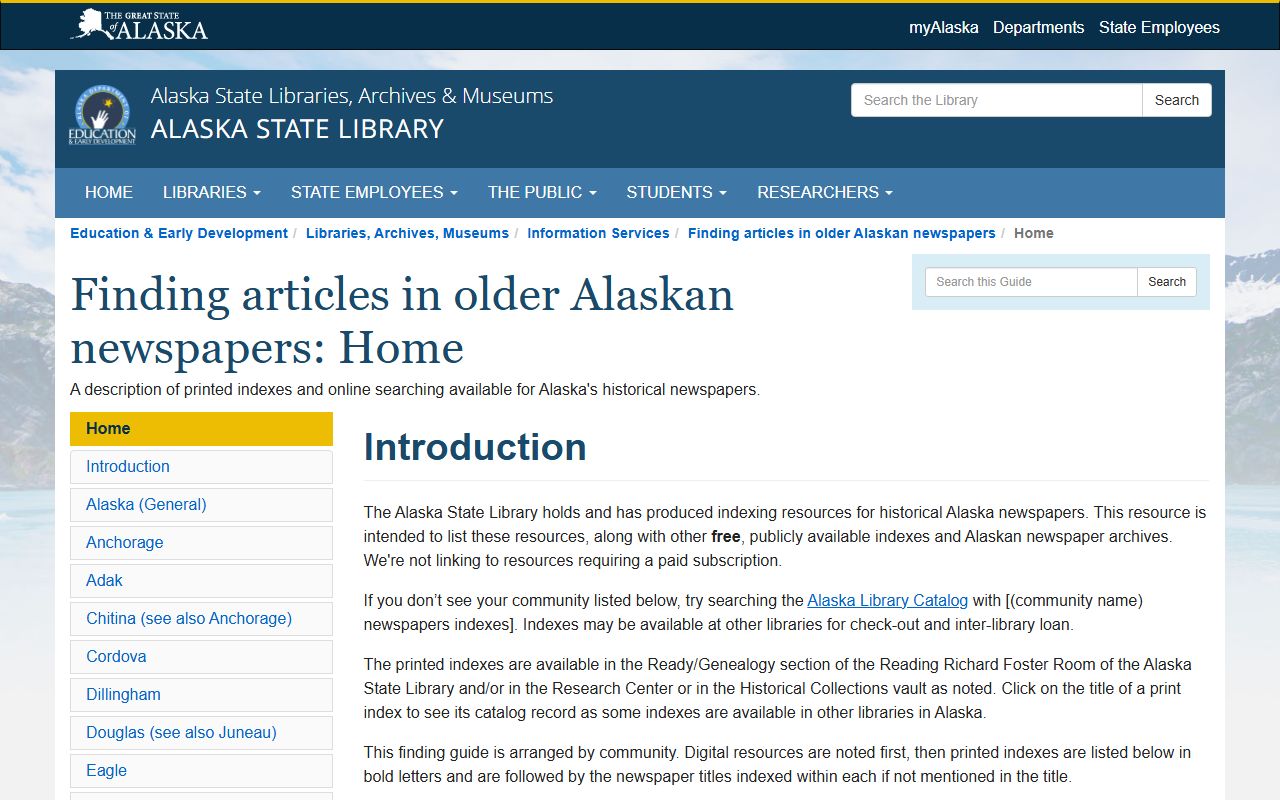
The newspaper indexes cover dozens of Alaskan papers from the territorial era through the late twentieth century, with obituary citations from communities across the state.
Alaska State Archives and Historical Obituary Collections
The Alaska State Archives holds more than 30,000 cubic feet of state and territorial records. Its partnership with FamilySearch.org has resulted in 1.1 million scanned documents being made available to the public online. These include birth, marriage, death, and probate records going back to the mid-1800s. The Archives provides a "Vital Statistics by Name" spreadsheet index that connects names to birth, marriage, and death records with direct links to online documents.
The Archives also holds WWI Military Service Records for Alaskans who served between April 6, 1917 and November 11, 1918, including those who died in service. For obituary researchers tracing family members from the territorial period, this collection provides death information that would not appear in standard vital records. The Archives also maintains naturalization records (1884-1991), coroner's inquests (1904-1959), and territorial court records that can round out a picture of someone's life and death.
The Alaska State Archives collection guides page lists the full range of historical record groups available to researchers, including vital statistics, court records, and territorial documents.
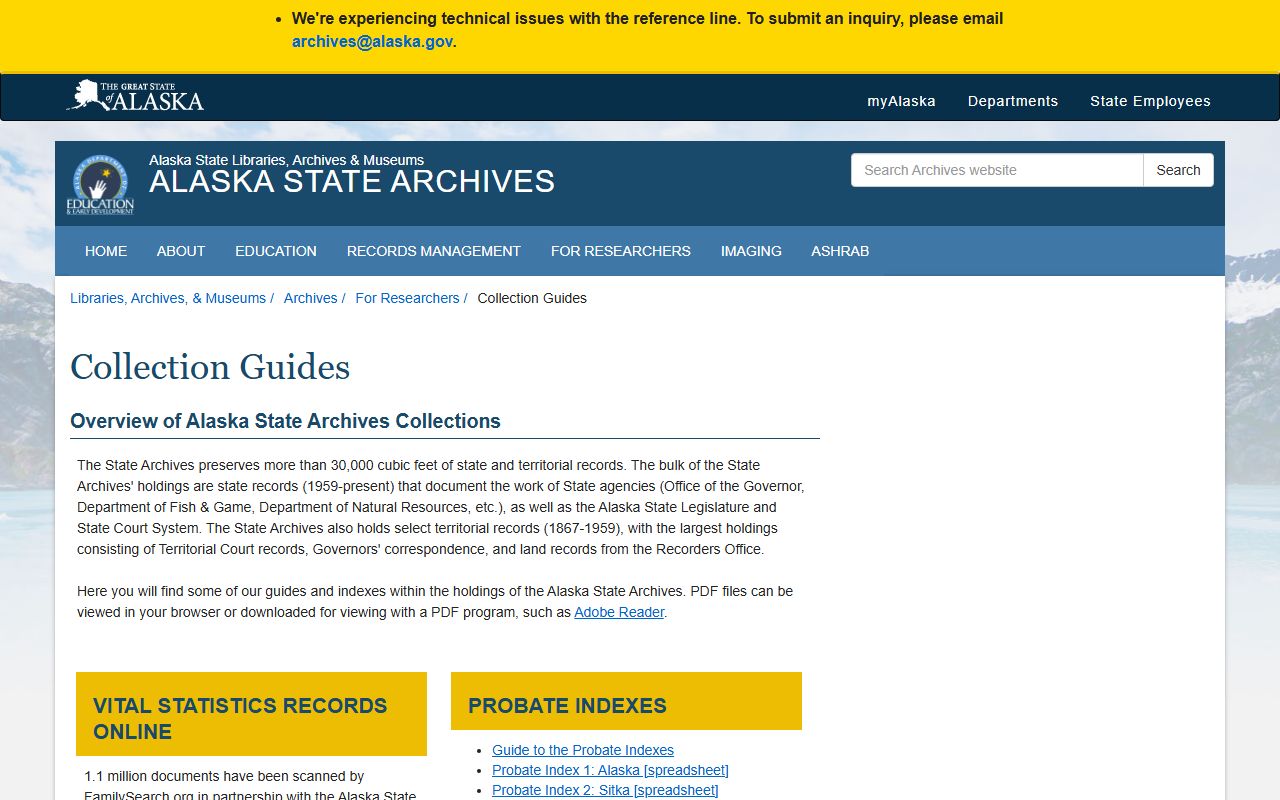
The Archives partnership with FamilySearch has digitized over a million documents, making Alaska obituary and death records from the territorial period available to search online at no charge.
Probate Records and Coroner Documents
The Alaska State Archives holds more than 17,000 probate case files spanning 1884 to 1959. These cases were created by U.S. Commissioners of Alaska District Courts and include estate inventories, guardianship records, burial expense accounts, notices and claims of creditors, proofs of heirs, wills, and coroner's inquests. For obituary researchers, probate files can confirm a death date, identify family members, and provide details that may not appear in a published obituary.
Probate records are especially useful for deaths that occurred before formal vital records registration began in 1913. From 1867 to 1884, Alaska operated under a basic American judicial structure. The Organic Act of 1884 established District Courts. One U.S. Commissioner served the entire district from Sitka in 1884, but by statehood there were four district courts and approximately sixty commissioners. Pre-1959 probate records have no restrictions and are fully open to the public.
Coroner inquests from 1904 to 1959 are held at the Alaska State Archives, with the Juneau coroner's records going back to 1899. These records document cause of death investigations and can provide detailed death circumstances. FamilySearch also provides access to the Alaska State Archives Coroner's Inquests (1913-1958) collection online, which is searchable and free to use. Location-specific collections include Anchorage Coroner's Records (ca. 1900-1959), Bethel Coroner's Records (1914-1955), Petersburg Coroner's Records (1924-1959), and Skagway Coroner's Records (1898-1935).
The Alaska Probate Records research guide explains what these historical case files contain and how to access them for obituary and death record research.
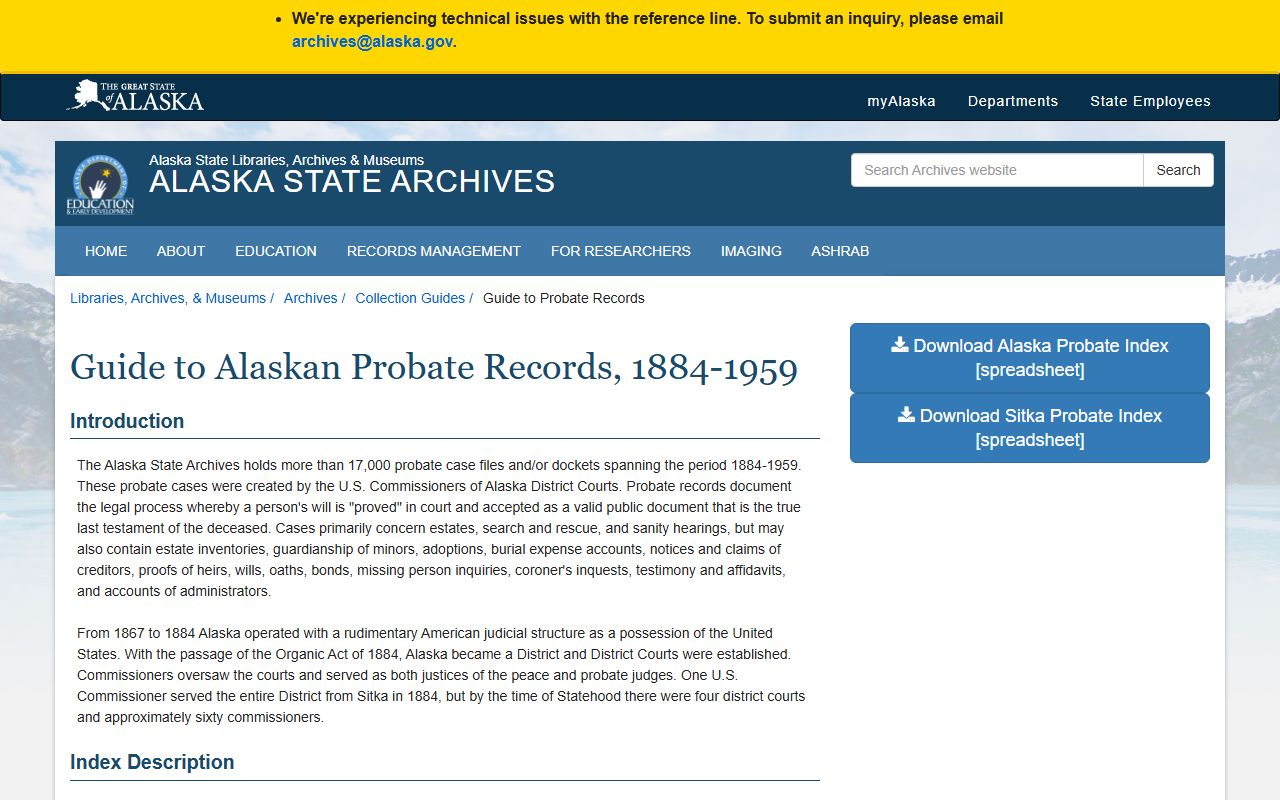
Probate files from 1884 to 1959 often contain burial expense accounts and proofs of heirs that add context to published obituary information.
Alaska Vital Statistics Law and Public Access
Alaska's vital records access rules are set by Alaska Statute 18.50, the Vital Statistics Act. This law governs how death certificates are issued, who can get them, and when they become public. Under AS 18.50.310(a) and (f), vital records are confidential for a set period. Deaths, marriages, and divorces become public records after 50 years. Birth records become public after 100 years. Once a record passes the confidentiality threshold, anyone can request it without stating a reason.
The Alaska Public Records Act specifically addresses vital statistics records. The general public records law excepts vital statistics records and states they shall be treated in the manner required by AS 18.50. It is unlawful for a person to inspect, copy, or disclose information from vital statistics records except as authorized by statute. This framework means that for deaths occurring before 1975, the records are now public. For more recent deaths, only qualified family members or legal representatives can get certified copies.
AS 18.50.320 sets out how certified copies are issued. A certified copy of a certificate is considered the original for all purposes and serves as prima facie evidence of the facts stated. One important provision: upon request and without charge, the bureau shall issue up to four certified copies of the death certificate of a veteran to a person for the purpose of satisfying an eligibility requirement for a benefit related to the death. This applies to anyone who served in the armed forces and was an Alaska resident at the time of death.
Note: The Alaska Public Records Act requires that requests be made in writing and submitted to the nearest office of the public agency. Records requests can be sent to the HAVRS office in Juneau or the Anchorage walk-in office.
Alaska Statute 18.50, the Vital Statistics Act, is the governing law for all death certificate access in Alaska, including rules for when obituary-related death records become available to the public.
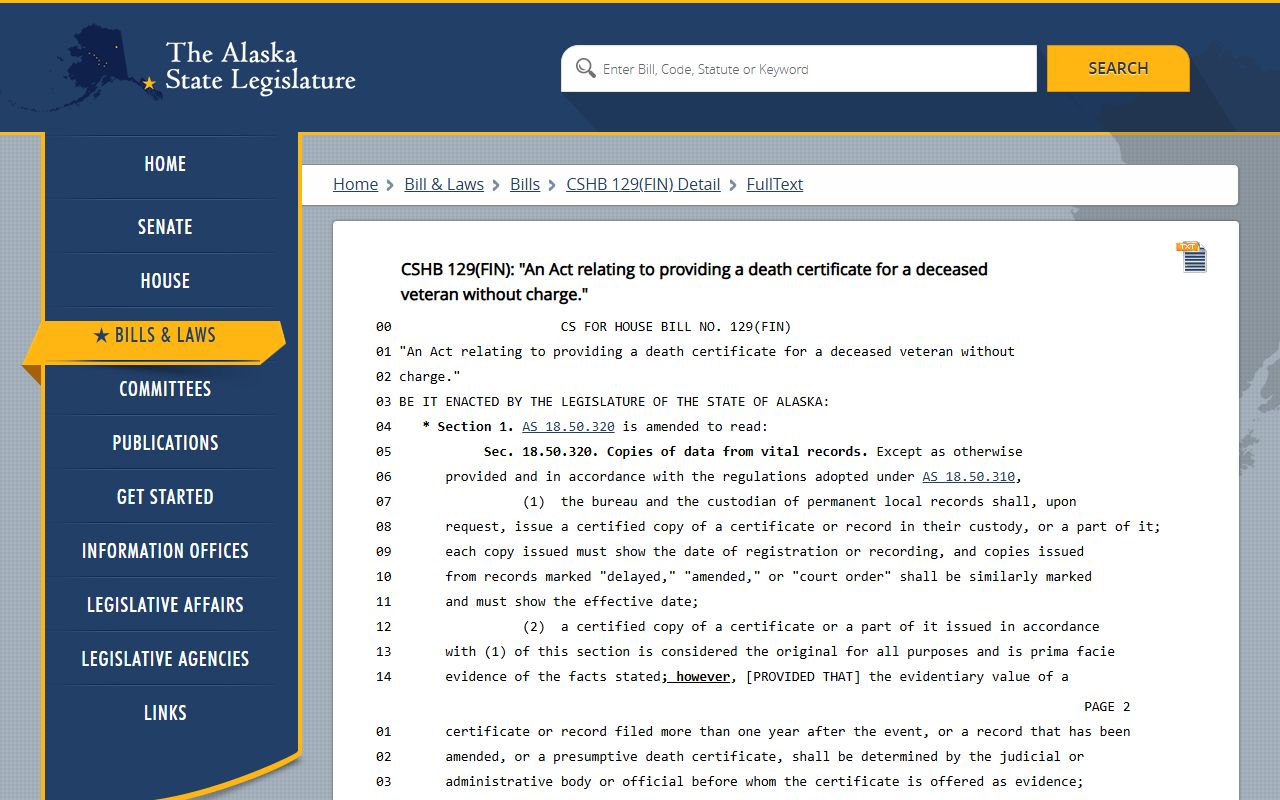
AS 18.50 sets the 50-year confidentiality period for death records and defines who qualifies as an eligible requester for restricted records.
Online Databases for Alaska Obituary Research
Several free online databases hold Alaska obituary and death records. FamilySearch provides the Alaska, Vital Records, 1816-1959 collection, which includes deaths from the Alaska State Archives with digital images of original documents. Specific location collections include Juneau death records (1903-1960), Ketchikan death records (1912-1959), Nome death records (1813-1959), Fairbanks death records (1913-1915), and Sitka birth, marriage, and death records (1817-1960). All of these are available for free through the FamilySearch Catalog. FamilySearch also holds the Alaska State Archives Coroner's Inquests (1913-1958) and the Alaska Probate Records Index (1884-1959) with about 17,000 cases.
The U.S. Social Security Death Index (1935-2014) and the U.S. Social Security Applications and Claims Index (1936-2007) cover Alaska residents. Both are available through Ancestry and FamilySearch. For names, death dates, and last known residences of Alaskans who died from 1935 onward, these indexes are often the fastest way to verify basic obituary details. Cemetery databases like Find A Grave and BillionGraves also hold burial records for Alaska cemeteries, many with photos.
The Anchorage Genealogical Society maintains the Index of Alaska Obituaries from Various Sources compiled by Patricia Roppel, covering 1899-1995 from newspapers, magazines, books, and grave markers. This index is available at the Anchorage Public Library. The AKGenWeb project maintains location-specific obituary collections for Kodiak, Kenai Peninsula, Nome, Bethel, North Slope, Wrangell, and other areas, all with searchable lists of historical death records submitted by researchers.
For recent deaths, local newspapers remain the main source. Most Alaska papers maintain online obituary sections. The Anchorage Daily News at obituaries.adn.com is the most comprehensive, with records from 1981 to the present indexed at the Anchorage Public Library.
The Reporters Committee guide to Alaska vital statistics exemptions explains how the Public Records Act interacts with vital records access rules, including what counts as public information and what remains restricted.
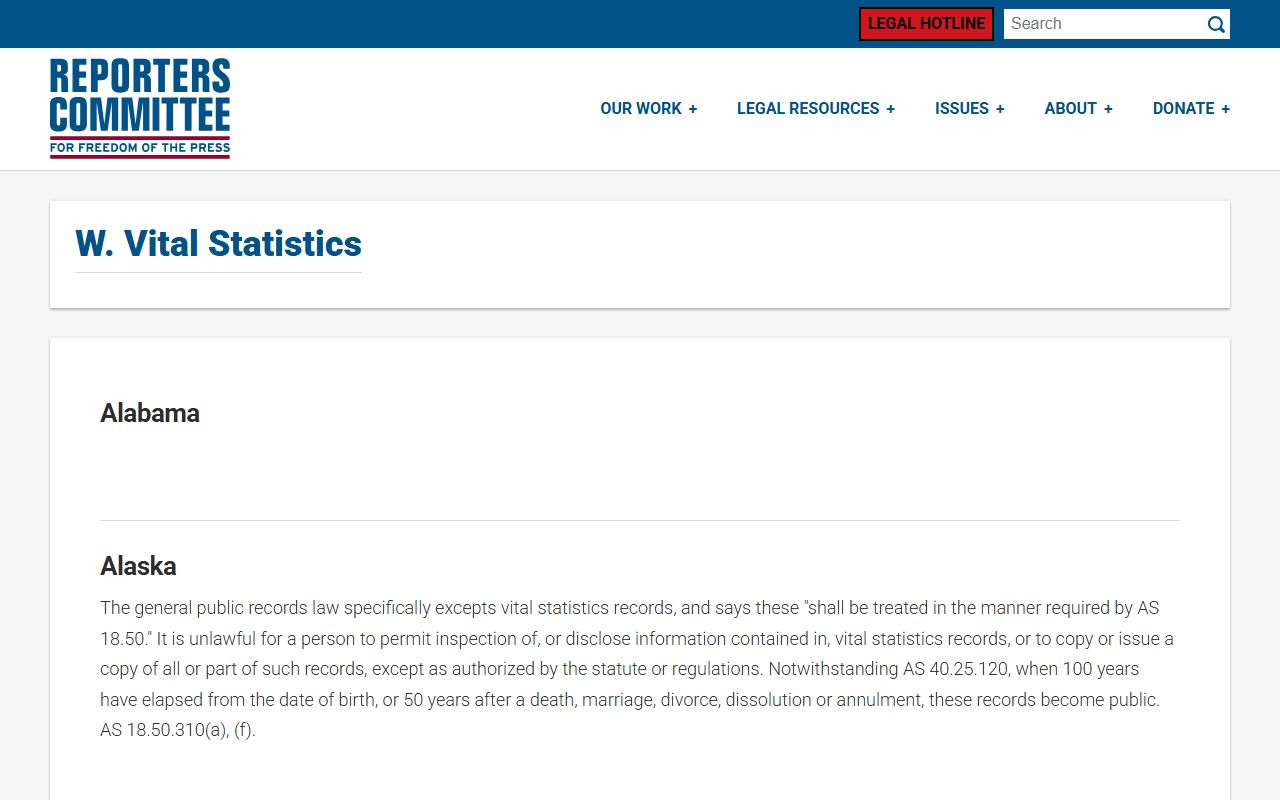
Understanding the overlap between the Public Records Act and AS 18.50 helps researchers know exactly what they can request and through which channels.
Regional Obituary Collections in Alaska
The AKGenWeb project provides some of the most detailed historical obituary collections for specific Alaska regions. The Kenai Peninsula AKGenWeb includes obituaries, deaths from the Social Security Death Records Index, cemetery listings, and vital records information. The site maintains an active obituary section where researchers can submit and find records for borough residents going back decades. The Kodiak Island Borough AKGenWeb holds obituaries organized A-M and N-Z, a death records index with entries going back to the early 1900s, and a probate records index for the area.
The Wrangell and Petersburg AKGenWeb site includes obituary collections from the Wrangell Sentinel and the Petersburg Pilot going back to the late 1800s. The North Slope AKGenWeb holds Social Security Death Index records for Barrow and surrounding communities. The Nome Census Area AKGenWeb maintains transcribed obituaries for Nome residents including notable figures like Herbie Nayokpuk, the Iditarod legend. The Bethel Census Area AKGenWeb holds one of the more detailed sets of individual obituary transcriptions, covering residents from throughout the Kuskokwim region from the early 1900s through the 2000s.
The Alaska Russian Orthodox Greek Catholic Church Index to Baptisms, Marriages and Deaths (1900-1936) is available through genealogy databases and covers communities throughout western and coastal Alaska where the Russian Orthodox faith was prominent. This is a key source for indigenous communities where church records predate civil vital records registration.
The Ballotpedia guide to Alaska FOIA procedures covers how to submit public records requests and what exemptions apply, including the vital statistics exemption relevant to recent death records.
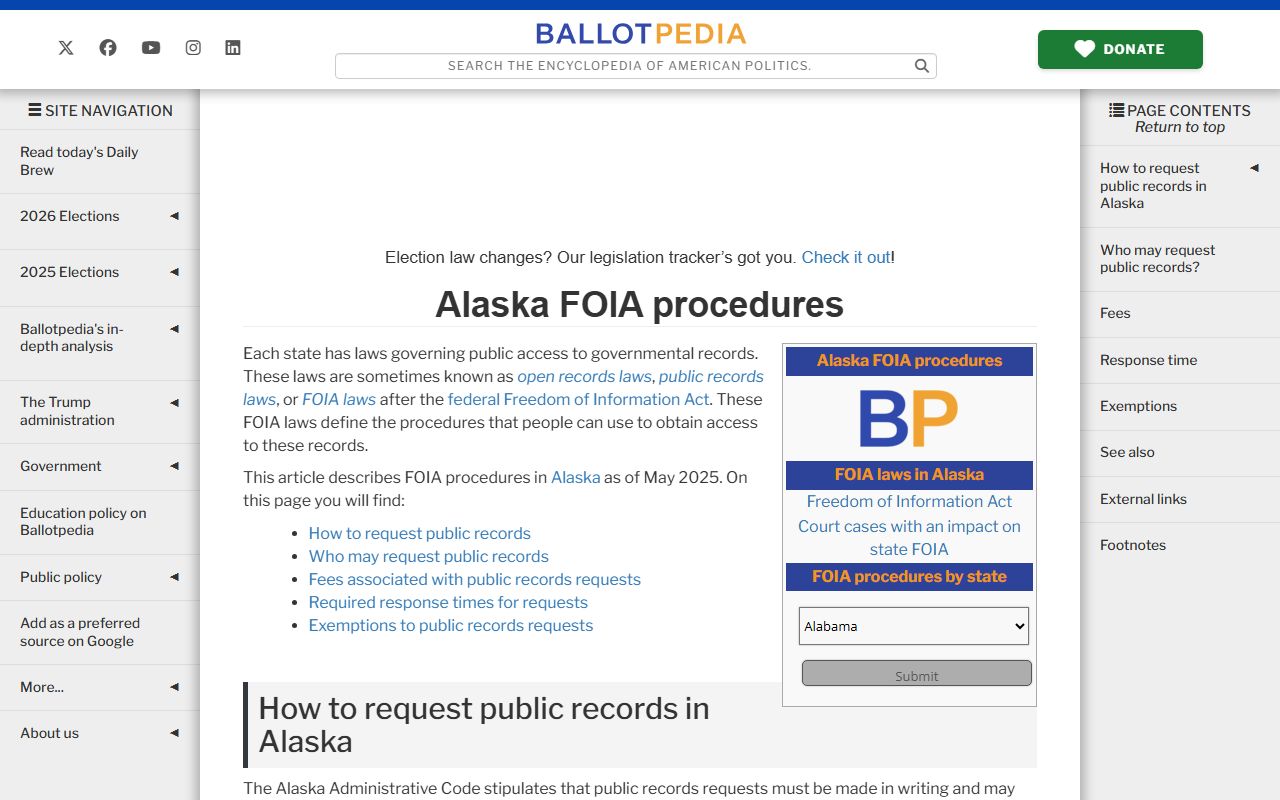
Alaska residents and researchers outside the state can submit written public records requests to the nearest agency office, with some records available online through state portals.
Getting Alaska Obituary and Death Records
To get a certified death certificate in Alaska, submit a request to the Alaska Bureau of Vital Statistics. You can do this in person at 825 L Street in Anchorage or at the Juneau office, online through VitalChek, or by mail. Each certified copy costs $30 for the first and $25 for each additional copy ordered at the same time. Checks and money orders are payable to Alaska Vital Records Office. Include a photo ID with your request. Processing times differ by method: VitalChek runs 2 to 3 weeks; mail and fax take 2 to 3 months.
For historical obituary records that are already public, options are broader. The Alaska State Archives reading room in Juneau provides access to probate files, coroner inquests, and vital statistics going back to the 1800s. Researchers can also use the FamilySearch catalog to view digital images of historical Alaska death certificates for free. Many public libraries across Alaska, including the Anchorage Public Library, hold printed obituary indexes and newspaper microfilm.
For recent obituaries not yet in archives, checking the newspaper that served the community where the person lived is the most direct route. Most Alaska newspapers keep searchable online archives going back several years. For older obituaries from the 1980s and 1990s, the Alaska State Library in Juneau maintains the most complete set of statewide newspaper collections on microfilm, available to researchers in person or through interlibrary loan.
The CDC Where to Write for Alaska Vital Records guide provides the official mailing address, fee schedule, and requirements for requesting Alaska death certificates from the state vital records office.
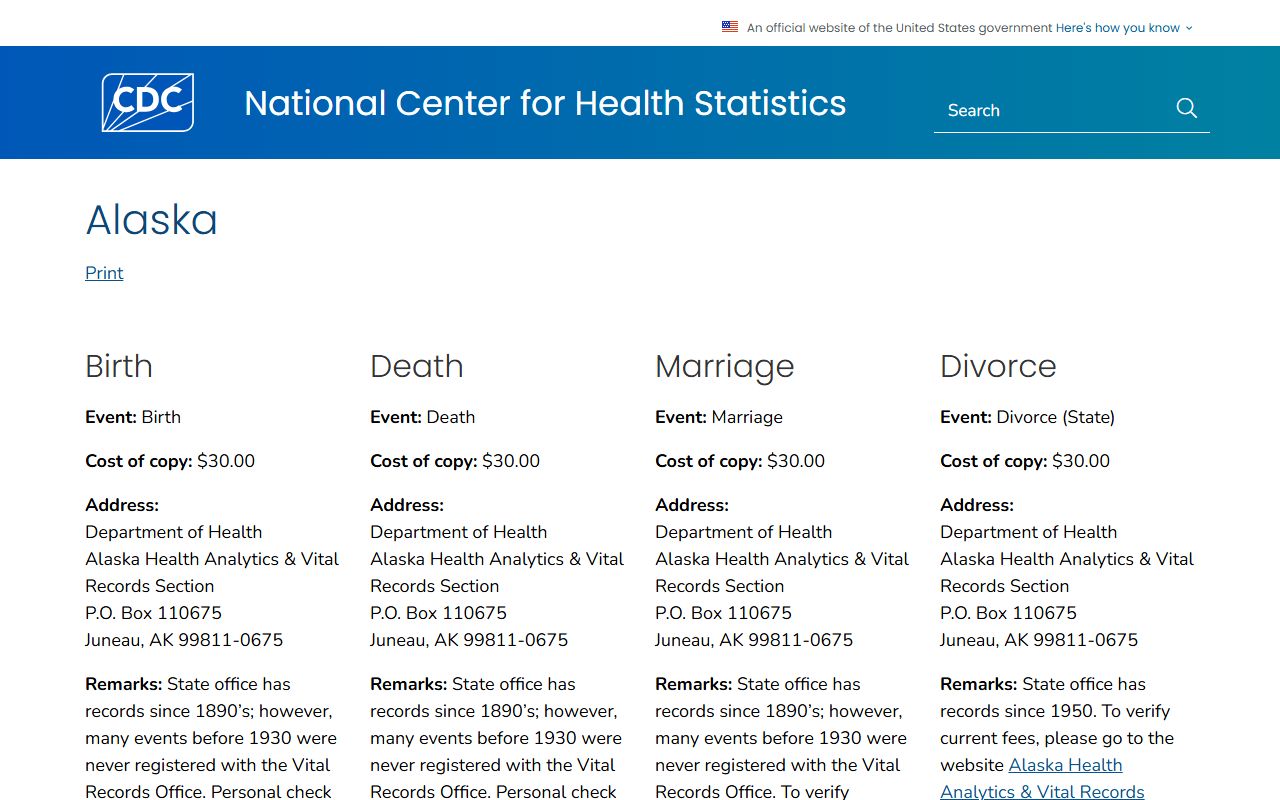
The CDC guide confirms that Alaska has maintained death records since the 1890s, with general registration compliance achieved by 1930 and records available through the state Health Analytics and Vital Records Section.
Browse Alaska Obituary Records by Location
Alaska obituary records are organized by borough and census area. Each location page covers local newspaper sources, historical records, and how to request death certificates for that area.
Alaska Boroughs and Census Areas
Select a borough or census area to find obituary sources, local newspaper archives, and record request information specific to that region.
View All 30 Alaska Boroughs & Census Areas
Alaska Cities
Find obituary records for major Alaska cities. Each city page links to local newspaper archives, genealogy resources, and borough-level record sources.